What to expect, and how to prepare, for your pet’s anesthetic procedure
General Information For Pets Receiving General Anesthesia:
- Your pet may be sleepy, uncoordinated, or shaky for the next 24 hours.
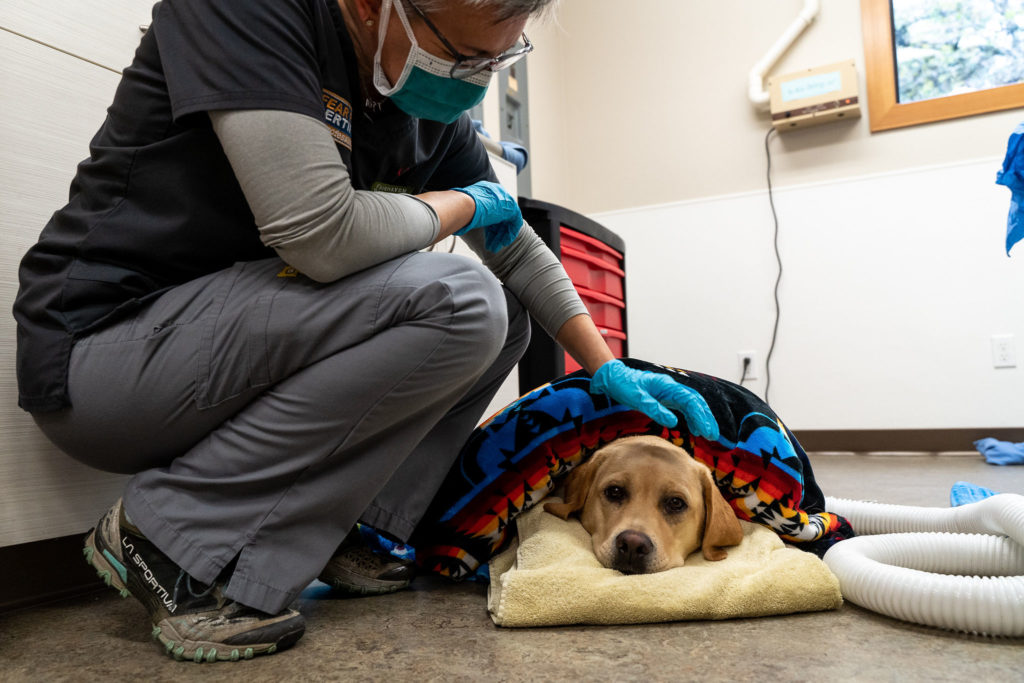
- Your pet should be kept in a warm dry area until they are fully awake and steady on their feet to prevent them from falling or injuring themselves.
- Your pet will receive IV fluids during their procedure and will be well hydrated. They may need to relieve themselves often for the following 24 hours. Please be prepared for additional trips outside for dogs and be sure cats have easy access to the litter box.
- Your pet will have a one shaved area on a leg where an IV catheter was placed. At times there will be an additional shaved area where we have attached equipment for monitoring your pet’s vitals during and post anesthesia.
- Anesthesia can upset a pet’s normal GI function. We give anti-nausea medications to help prevent GI upset. Additionally, we ask that:
- Your pet receives no more than ¼ of their meal and only small amounts of water the evening of the anesthetic procedure.
- You remove access to food and water for 12 hours if you pet vomits. You may offer ¼ of their meal and small amounts of water after 12 hours from their last vomiting episode.
- While your pet is under general anesthesia, we place an endotracheal tube in their airway to provide oxygen and gas anesthesia. Some pets may have a mild cough for up to 3 days after the procedure – this is not unusual. It is not usually concerning, but we do ask that you monitor your pet during this period. If the coughing worsens or seems severe, please contact us.
Medications:
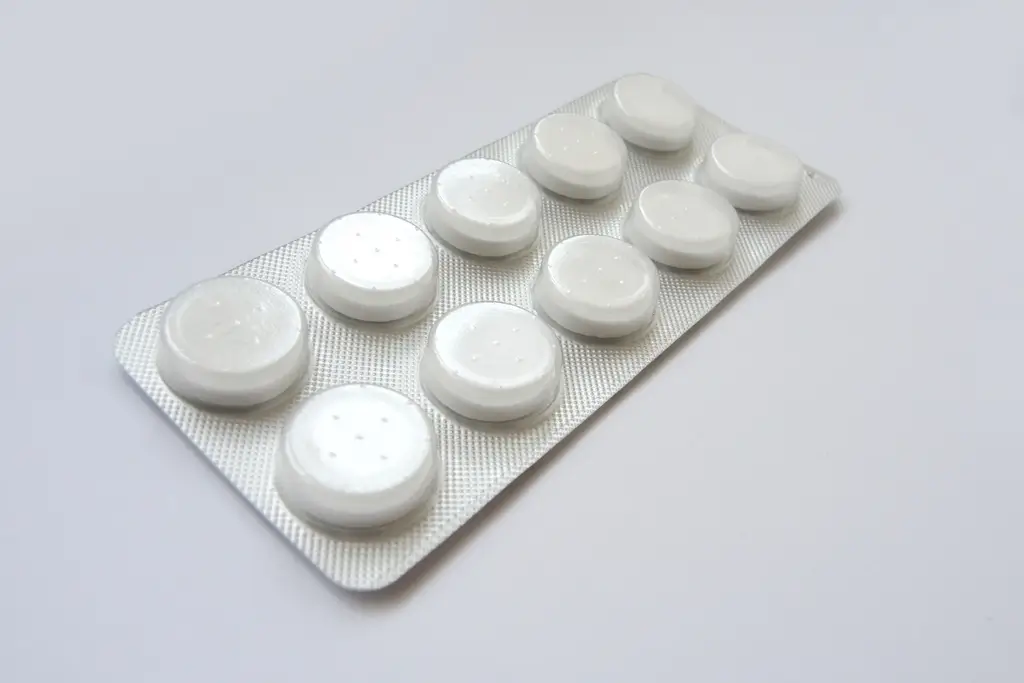
- All procedures requiring sutures will receive pain medications and occasionally other medications. Some of the medications are given by injection and are long lasting and you will not need to give additional doses at home.
- Some procedures will require you to give additional doses at home for 3-14 days (depending on the procedure).
- Tablets and capsule type medications can be given with food. We find the best success in giving medications hidden in Pill Pockets, bread, cheese or other small treats. Some have found a small amount of butter works well for cats.
- If your pet is reluctant to take medications, please review this handout from Fear Free for low stress pilling strategies.
Information for pets with incisions and sutures:
- Activity and excitement:
- You will need to restrict your pet’s activity and excitement for 14 days to promote healing and reduce stress to the sutures and incision site.
- Dogs should be confined inside and must be leashed when taken outside for short slow paced potty walks.
- Cats should be kept inside and restricted from jumping and climbing.
- Depending on the surgery and where the incision is located, your veterinarian may ask that your pet be confined to a crate during the recovery period.
- Surgical incisions:
- Incision sites should be inspected twice daily. If you notice swelling or inflammation, please contact us (sometimes texting a photo is a quick way for us to determine if you need to return for a progress exam).
- The incision site must be kept clean and dry – no bathing or swimming for a minimum of 14 days.
- To prevent licking or scratching the incision, we recommend the use of:
- A Recovery Suit – for incision sites on your pets body. To determine the proper size, measure from the base of the neck to the base of your pet’s tail.
- An Elizabethan collar – for an incision site behind your pet’s shoulders, tail or on the lower front legs (the Elizabethan collar should extend past the tip of your pet’s nose to be effective).
- An inflatable collar – for incisions on the neck/shoulder area. Occasionally these collars will be effective in preventing access to incisions on the bodies of small dogs and cats with short necks.
- These items are available from FVH, or you may purchase them ahead of time from our local pets stores or online.
- Dissolvable sutures under the skin are used when possible; these sutures do not need to be removed.
- Some procedures have visible sutures that require removal 14 days from the procedure date.
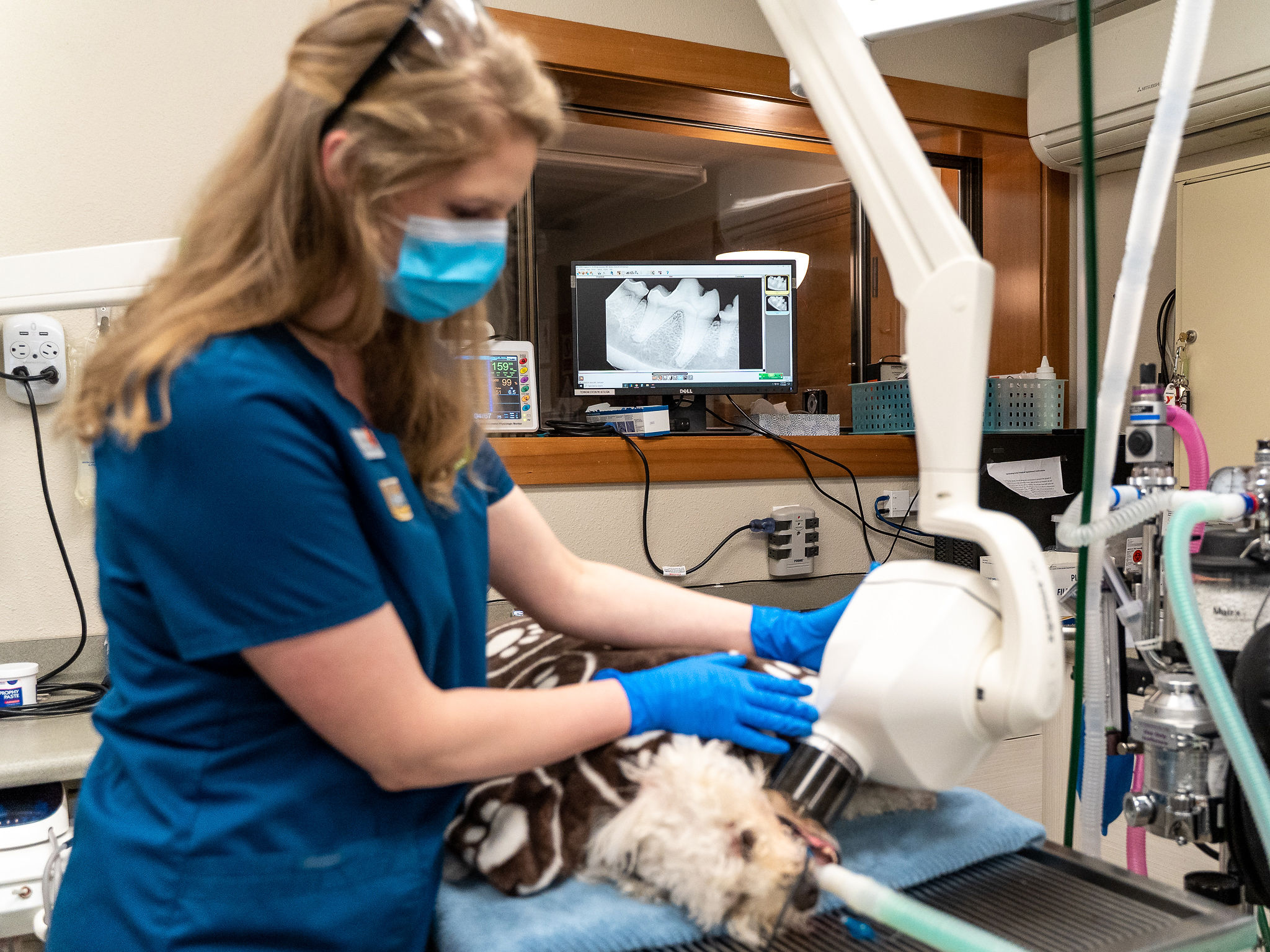
Information for pets post dental procedures:
- If extractions or oral surgery is performed;
- Your pet will need to eat soft food for up to 10 days.
- You may use a canned variety of their dry food or soften their dry food by soaking it in hot water until it softens (stir well and be sure it has cooled before feeding).
- Your pet will have sutures. These sutures will dissolve and do not need to be removed.
- You will need to remove access to any chews, hard toys and refrain from playing tug games for 10 days.
- You might see dried blood or blood tinged saliva or traces of blood in the drinking water within the first 24 hours following oral surgery. This is expected and there is no need for concern unless the bleeding increases or does not decrease within 24 hours.
- Your pet will need to eat soft food for up to 10 days.
- If your pet had a dental cleaning with no extractions or oral surgery:
- Your pet will benefit from eating soft food for 1-2 days if their gums are irritated after the subgingival cleaning.
- You might see a little blood tinged saliva if the gums were irritated by the subgingival cleaning.
Please Contact us if:
- Your pet is not eating within 24 hours of being discharged.
- Your pet is vomiting or has diarrhea for more than 24 hours.
- Your pet is not urinating and defecting normally within 36 hours after being discharged.
- Your pet’s normal alertness and coordination have not returned within 24 hours after being discharged.
- Your pet is licking or scratching their incision site(s).
- Your pet’s incision site is weeping fluid or pulling apart.
- Your pet has removed any sutures.
- Your pet is pawing or rubbing their face after 12 hours (dental procedure).
- Your pet is coughing severely, gagging or wheezing.
*These are general instructions for basic anesthetic procedures. At the time of your pet’s discharge you will meet with the surgical technician or assistant that cared for your pet during their procedure, and they will relay specific instructions for your pet from the veterinarian that performed their procedure. They will also provide you with a written copy of the discharge instruction from the veterinarian.
We do not have an overnight/on-call veterinarian. If you have emergent concerns outside of office hours please contact:
Animal Emergency Care in Bellingham 360-758-2200
OR
Pet Emergency Center in Mount Vernon 360-848-5911